
Why In-House T4/T6 Heat Treatment is the Supply Chain Differentiator: Lead Time, Quality, and TCO
In the current global manufacturing landscape, procurement and R&D decision-makers face unprecedented anxiety: supply chain disruptions, raw material price volatility, and extreme demands for Performance and Lightweighting from end markets.
When discussing Aluminum Forging, the market often focuses on "press tonnage" or "die precision." However, through long-term collaborations with top-tier automotive brands (such as Ferrari and Ford), heavy motorcycle manufacturers, and aerospace clients, we have uncovered a brutal truth: The success of a project is rarely determined by the moment of forging, but by whether the post-forming "Heat Treatment" is controllable.
AFT (Aluminum Forging Technology), as a leading Taiwanese forging manufacturer with 300 employees and 30 years of experience, understands that in an era prioritizing traceability and ESG, keeping T4/T6 heat treatment in-house is no longer an option—it is the watershed moment for high-end supply chains.

1. The Brutal Truth of Forging: Shape vs. Soul
Many misconceptions assume forging is simply pressing aluminum into a shape. In reality, for high-strength aluminum series like 2xxx, 6xxx, and 7xxx, the material is merely a "semi-finished product" immediately after forging. It has the physical shape and grain flow, but its internal microstructure, precipitate phases, and stress states have not yet met industrial standards.
Forging defines the "Shape"; Heat Treatment endows the "Soul."
If the heat treatment process is unstable, even a dimensionally perfect forging can fail due to insufficient strength, fatigue cracks, or warping during assembly. This is why AFT insists on maintaining IATF 16949:2016 and ISO 14001:2015 certifications—we are not selling metal blocks; we are selling verifiable safety.
2. Decoding T4 & T6: How AFT Programs Performance
You can visualize aluminum heat treatment as a two-stage "performance programming" for the material. AFT distinguishes itself not just by forging capacity, but by equipping our facility with 8 sets of T4 Solid Solution equipment and 7 sets of T6 Artificial Aging equipment.
- T4 Solid Solution Treatment – Returning to Uniformity:
The goal isn't hardening, but using precise temperature control to "dissolve" alloy elements (like Copper, Magnesium, Silicon) back into the aluminum matrix uniformly, then fixing them via rapid quenching. This step is critically sensitive to temperature uniformity; outsourcing it introduces uncontrollable logistics variables. - T6 Artificial Aging – Peak Strength:
While T4 material hardens naturally over time, the process is slow and inconsistent. T6 uses controlled heating to force the precipitation of strengthening phases, ensuring hardness hits peak levels within a predictable timeframe.
AFT's advantage lies in our ability to tune heat treatment curves in-house for specific materials (e.g., Aerospace 7075, Automotive 6082/6110, or Piston 2618), ensuring mechanical property consistency across every batch.
3. Why Outsourced Heat Treatment is a Supply Chain Assassin
For International Procurement Offices (IPO) or Project Managers (PM), outsourcing heat treatment often means doubling the risk:
- The Lead Time Black Box: You cannot control the vendor's schedule. A bottleneck during peak season can halt your entire assembly line.
- Quality Disconnects: When cracks or hardness issues arise, forging plants and heat treaters often shift blame (Material issue? Forging temp? Quench rate?), delaying 8D reports indefinitely.
- Data Silos: In the Industry 4.0 era, lacking real-time heat treatment data integration makes true production traceability impossible.
AFT eliminates these hidden costs through an "In-House One-Stop" model, integrating forging and heat treatment parameters into a single quality management system.
4. Decision Matrix: In-House T4/T6 vs. Outsourcing
To help you evaluate your supply chain strategy, we have compiled the following comparison. This table helps you reconsider vendor selection from a Total Cost of Ownership (TCO) perspective.
| Criterion | AFT Model (In-House Closed Loop) | Traditional Model (Outsourced) | Real Impact |
|---|---|---|---|
| Lead Time Management | Highly Controllable Schedules sync with forging/machining; emergency insertion possible. |
Uncontrollable Subject to 3rd party capacity; transport time cannot be compressed. |
SOP Milestones & Inventory Turnover. |
| Quality Consistency | Excellent Same furnace, same parameters, minimal batch variation. |
Volatile High risk of mixed batches/furnaces; wide hardness scatter. |
Machining yield & Product life. |
| Distortion Control | Predictive & Integrated Aligned with CNC strategy to pre-compensate for deformation. |
Reactive Deformation discovered after return; machining becomes difficult. |
Hidden scrap costs & Rework. |
| Traceability | Single Point of Contact Complete data chain; root cause found quickly. |
Blame Shifting High communication costs; slow resolution cycles. |
Client Trust & Brand Reputation. |
| Special Process Capability | High Custom parameters for special alloys (e.g., 2618 Pistons). |
Low Usually offer generic parameters; hard to customize. |
Limits R&D innovation. |
| Total Cost (TCO) | Optimized Low communication, logistics, and failure costs. |
High Risk Unit price looks low, but hidden failure costs are massive. |
Real money is lost in "Risk." |
5. From DFM to Mass Production: AFT's Full-Spectrum Solution
"In-house heat treatment" is just one part of AFT's manufacturing strength. To truly "Break the Impossible," we have built a complete ecosystem from concept to finished product.
1. Front-End Co-Design: Killing Problems on Paper
We are not just an OEM; we are your engineering partner. The AFT team intervenes at the DFM (Design for Manufacturability) stage, utilizing QForm software for simulation. Combined with our 30 years of on-site experience, we fill the gap between software prediction and reality, warning of forging defects before molds are cut.
2. A Complete Hardware Arsenal
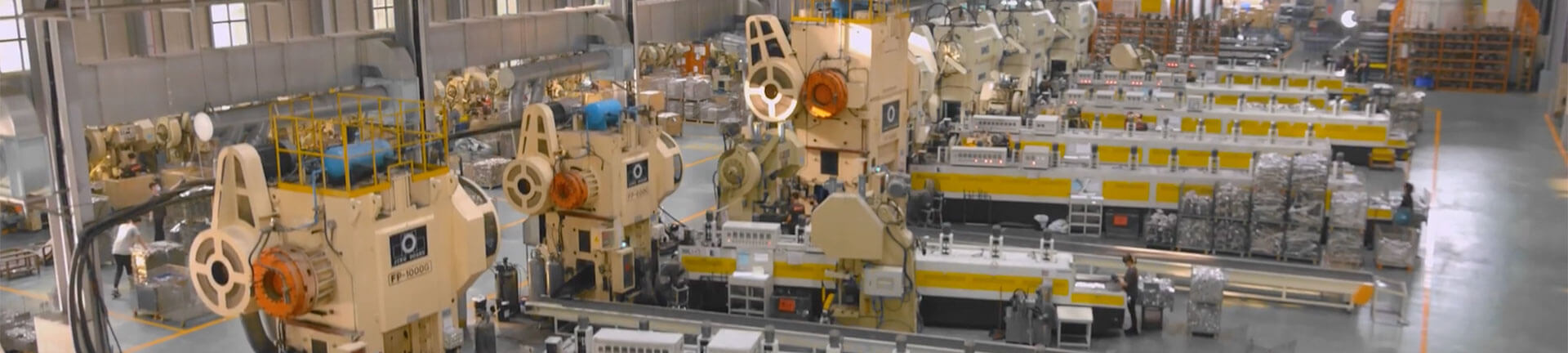
We possess a complete forging line ranging from 600T to 8000T and are aggressively expanding with our new G and H buildings (an investment exceeding $70 million USD), adding extrusion lines and large-scale presses. Furthermore, we integrate 52 CNC Machining Centers along with anodizing and coating processes.
3. Proven Track Record
Our products are trusted by world-class brands:
- Automotive (50%): Ford (Ranger, Mustang), Ferrari (SUV Suspension), EV components.
- Motorcycle (35%): Forged calipers and frames for Ducati, Harley-Davidson, and BMW.
- Others: High-end e-bike side arms, semiconductor equipment parts.
6. Frequently Asked Questions (FAQ)
To assist you in understanding aluminum forging and AFT's services, we have compiled the following FAQs:
CTA | Upgrade Your Requirement to a "Deliverable Solution"
If you are struggling with supply chain instability or seeking a forging partner who can keep up with your innovation speed, AFT is ready.
Don't let heat treatment be a gamble on your product quality. Contact us today with your drawings or specifications. Let us transform your design into a mass-producible, traceable solution.