
Aluminum Forging Procurement in the Age of U.S. Reshoring:7 Common Misconceptions About the 2025 Supply Chain
Summary
With U.S. aluminum tariffs rising to 50% in 2025, combined with the continuing wave of reshoring, aluminum forging procurement has become far more complex than many buyers expected. From the perspective of AFT Precision Forging’s International Marketing Director, this article unpacks the seven most common misconceptions procurement teams face today and explains how resilient supply chains can be rebuilt through design optimization, process integration, and smart manufacturing.
Introduction: When Reshoring Meets High Tariffs, Procurement Logic Must Change
Over the past two years, “U.S. reshoring” has become a phrase that is often oversimplified.
Many sourcing and procurement leaders assume that bringing supply chains closer to home automatically means shorter lead times, more stable costs, and lower risk. But if you look closely at the aluminum forging market in 2025, the reality is almost the opposite.
When U.S. aluminum tariffs were raised to 25% in February 2025 and then pushed to 50% on aluminum and downstream aluminum-derived products in June, this was not just a change in percentages. It fundamentally reshaped the total cost structure of the industry.
When landed cost starts fluctuating sharply due to tariffs, record-high premiums, and increasingly complex origin documentation requirements, any buyer still relying on pre-2025 sourcing assumptions is exposing the business to serious operational risk.
As one of Taiwan’s leading aluminum forging partners, AFT Precision Forging has more than 30 years of experience and operates under IATF 16949-certified quality systems. From our vantage point, we see seven recurring misconceptions U.S. buyers make when trying to rebuild their supply chains.
Part I: 7 Common Misconceptions in U.S. Aluminum Forging Procurement
Misconception 1: “Local forging automatically means a more stable supply chain.”
Many buyers assume that shifting orders back to domestic suppliers is enough to reduce volatility. In reality, U.S. aluminum premiums reached record highs in 2025, which means even buyers sourcing closer to the end market still face extremely high physical aluminum costs.
AFT’s perspective:
A shorter supply chain does not automatically mean a more stable cost structure. The real question is whether your supplier has upstream flexibility and material control. Through our in-house extrusion line investments, AFT can manage raw material allocation more flexibly and help stabilize supply conditions.
Misconception 2: “Tariffs only affect raw aluminum.”
That is no longer true. In 2025, tariff measures extended beyond primary aluminum and into downstream aluminum-derived products, especially in automotive suspension components, engine-related parts, and other industrial applications.
AFT’s perspective:
Forged aluminum components are no longer just a manufacturing issue. They are now part of a broader trade and tariff strategy. Through AFT’s DFM, or Design for Manufacturability, approach, we help customers optimize part geometry and reduce unnecessary weight during the design stage, which can directly reduce tariff-driven cost exposure at the source.
Misconception 3: “If the market softens, premium capacity will become more available.”
Although overall North American aluminum demand was down 4.1% early in 2025, high-value sectors such as aerospace continued to compete aggressively for capacity, as seen in major expansion moves like GE Aerospace’s billion-dollar investment program.
AFT’s perspective:
Best-in-class equipment and experienced technical teams remain scarce resources, regardless of short-term fluctuations in broader demand. When high-value industries lock in premium capacity, industrial buyers need long-term partners with real expansion capability. At AFT, our large-scale plant expansion plans across the G, H, and M facilities are part of that long-term commitment.
Misconception 4: “Switching suppliers equals supply chain restructuring.”
Changing suppliers is not the same as restructuring a supply chain. That is just relocation. Real restructuring means upgrading the way sourcing decisions are made.
AFT’s perspective:
A resilient supply chain requires a full review of material routes, lead-time flexibility, engineering change management, and documentation traceability. AFT provides comprehensive support from concept to verification so customers can build a more predictable and sustainable delivery model.
Misconception 5: “Scrap aluminum is a secondary variable.”
In a high-tariff environment, scrap is no longer a secondary concern or just a byproduct. It is becoming a strategic resource.
AFT’s perspective:
The companies that can manage stable, lower-carbon secondary aluminum streams will hold greater pricing power and greater resilience. AFT operates under ISO 14001 environmental management standards and continues to invest in aluminum material research and recycling utilization, aligning with the global ESG direction.
Misconception 6: “Documentation is just a QA department issue.”
In a volatile market, suppliers that lack robust traceability, clear lot-level records, and disciplined change management are introducing hidden risk into the supply chain.
AFT’s perspective:
Aerospace and automotive customers require rigorous production documentation and quality traceability. At AFT, we apply the principles of IATF 16949 through IoT-enabled machine connectivity and production dashboards that deliver real-time, visual, and highly traceable production records.
Misconception 7: “A supplier is just a contract manufacturer, not an engineering partner.”
In today’s market, a factory that simply takes a drawing and runs production is no longer enough.
AFT’s perspective:
Buyers need partners who can help manage design risk and scale-up risk together. AFT brings strong design and engineering capability to the table, using QForm simulation combined with over 30 years of hands-on forging experience to identify and eliminate potential forging defects during development, not after launch.
Part II: Strategic Comparison Matrix
Old Thinking vs. the 2025 Reality
| Decision Area | Old Mindset (Pre-2024) | 2025 Reality (Post-Tariff) | AFT’s Response Advantage |
| Procurement Goal | Lowest piece price | Lowest total risk cost and landed cost | One-stop processing reduces logistics losses and tariff exposure |
| Supplier Role | Job shop / contract manufacturer | Co-developer / engineering partner | Strong engineering support with DFM and structure optimization |
| Demand Interpretation | The market is either hot or cold | The market is fragmented; premium capacity is scarce | Continued investment of USD 70 million in plant expansion and advanced equipment |
| Material Strategy | Spot purchasing; low recycling focus | Strategic material management with scrap utilization | Vertical integration through extrusion capacity and more stable material access |
| Quality Documentation | Administrative burden | Foundation of supply chain resilience | Practical IATF 16949 execution and full traceability |
| Automation | A way to cut labor cost | A tool to ensure consistency and stable throughput | Robotic handling and automatic-feed continuous cold forging systems |
Part III: How AFT Redefines the Meaning of a “Qualified Supplier”
As International Marketing Director, I understand very clearly what keeps U.S. buyers up at night in 2025.
AFT exists to provide a solution that goes beyond traditional forging.
1. Deep involvement in design and engineering
We do not simply wait for finished drawings. Once a customer presents an initial concept, our engineering team begins working immediately. By using QForm software for metal flow and stress simulation, we can anticipate forging risks such as folds, underfill, and other defects before tooling is finalized.
For overseas customers, we provide detailed technical presentations and engineering reports that clearly explain how design adjustments can improve yield, reduce risk, and protect margins. In a 50% tariff environment, that kind of design-stage optimization can have a direct impact on profitability.
2. Diverse material knowledge and precision forging capability
From 6110 and 6082 alloys commonly used in suspension applications to aerospace-grade 7050 and 7075, AFT understands how to match alloy selection to real-world performance requirements.
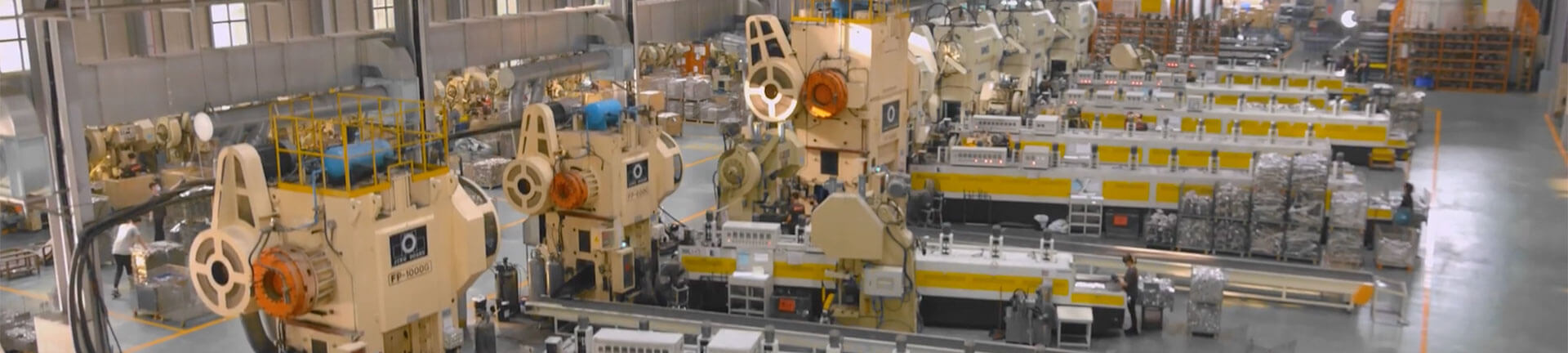
Our 8000-ton hydraulic forging press allows us to handle large and highly complex structural components, while our continuous cold forging capability supports high-volume production of precision parts.
3. One-stop in-house secondary processing
Many supply chain breakdowns occur when heat treatment or machining is outsourced.
AFT addresses that risk with extensive in-house capabilities, including:
- In-house heat treatment: 15 sets of T4 and T6 equipment with fully traceable process data
- CNC precision machining: 52 machining centers, including 4-axis and 4.5-axis systems
- Surface treatment: pickling, shot blasting, vibratory finishing, anodizing, and even e-coating
This one-stop capability significantly reduces transportation-related damage risk, handoff delays, and management complexity.
4. Talent and smart factory management
We have 320 well-trained employees. That is not just headcount. It is a manufacturing knowledge base.
Through IoT-enabled machine connectivity, we monitor production data and OEE in real time. For customers, that means when you ask about order status from the other side of the world, we can give you a precise, data-backed answer, not a vague estimate.
Part IV: Questions to Ask Before Sending an RFQ in 2025
In a 50% tariff environment, U.S. buyers should ask potential suppliers the following questions before issuing an RFQ:
- How do you calculate material utilization, and can you provide DFM recommendations to reduce my landed cost?
- Can your heat-treatment data be linked directly to part batch numbers in real time?
- If aerospace demand tightens market capacity further, what expansion plans do you have to protect my long-term supply?
- How do you manage scrap aluminum, and how can that support my carbon-footprint reporting?
FAQ: Common Questions About the 2025 Aluminum Forging Supply Chain
Q1. Why doesn’t U.S. reshoring automatically make aluminum forging procurement easier?
A: Because the 2025 tariff and premium environment shows that a shorter geographic supply route does not eliminate cost volatility. Buyers now face more complexity, not less, especially in downstream tariff exposure and global resource competition.
Q2. What is the most overlooked hidden cost in the 50% tariff era?
A: Overdesign that adds unnecessary weight, and fragmented supply chains that create avoidable logistics losses. Under a 50% tariff structure, every gram of extra weight and every day of shipping delay becomes more expensive.
Q3. Why do aerospace expansion headlines matter to general industrial buyers?
A: Because high-end manufacturing absorbs the best engineering talent, the most capable forging presses, and the highest-grade aluminum supply. That makes qualified suppliers harder to secure for everyone else.
Q4. Why should scrap aluminum be part of procurement strategy?
A: Because scrap is no longer just waste. As carbon reduction requirements and material cost pressures increase, suppliers with circular material capability can offer stronger price resilience and better environmental documentation.
Q5. What key problem can a supplier like AFT solve for U.S. buyers?
A: We solve uncertainty. By integrating design, engineering, heat treatment, validation, and manufacturing into one coordinated system, we eliminate the gaps between supply chain nodes and help projects land on time and at the expected quality level.
Q6. Who should read and share this article?
A: This article is highly relevant for Chief Procurement Officers, Supply Chain Managers, Product Engineers, and Project Managers. It helps teams shift their thinking from “buying parts” to “buying resilience and problem-solving capability.”
Conclusion: Choose a Partner That Can Help You Challenge the “Impossible”
The aluminum forging market after 2025 is no longer a market that rewards conventional contract manufacturing alone.
Under the combined pressure of tariffs, reshoring, and technical capacity fragmentation, buyers need partners with a Beyond Tradition mindset.
AFT Precision Forging’s USD 70 million expansion plan in Taiwan, together with our discipline in design, process control, and quality assurance, is built around one goal: when our customers are facing an “impossible” market environment, we help create a practical and reliable path forward.
Redefine your aluminum forging supply chain with AFT.
Official Website:
https://www.aft-forge.com/
Key Strengths:
Co-design support, one-stop processing, 8000-ton forging capability, IATF 16949-certified quality system
Call to Action:
Are your sourcing decisions still based on 2024 assumptions? Learn how AFT can help you navigate the 50% tariff challenge through DFM and smart manufacturing.