
The 2025 Shake-Up in U.S. Aluminum Forging: How AFT Became a Core Partner for High-Value Supply Chains Through End-to-End Integration
Summary: In 2025, U.S. aluminum tariffs climbed to 50%, forcing global supply chains to recalculate landed cost from the ground up. Amid demand polarization and mounting cost pressure, procurement teams are no longer buying on price alone. This article examines how Allied Forge Technology (AFT) delivers a low-risk, high-quality "one-stop forging solution" to the aerospace, automotive, and EV sectors across five dimensions: design, manufacturing, quality control, automation, and market strategy.
Introduction: When "Cheap" Is No Longer the Benchmark, Who Can Win the High-Value Forging Orders?
The U.S. aluminum forging market in 2025 is undergoing an unprecedented pricing revolution. With tariffs raised to 25% in February and aluminum-derivative duties doubling to 50% in June, the traditional "material + machining" quotation formula has broken down entirely. As landed cost becomes increasingly difficult to forecast, U.S. buyers are shifting their strategy from "finding the lowest price" to "finding the most reliable partner with genuine design capability."
As a leading Taiwanese aluminum forging manufacturer, AFT has always operated under the principle of "Beyond Tradition. Break the Impossible." We understand that, with both tariffs and premiums surging simultaneously, only a manufacturer with strong design expertise, rigorous quality control, and intelligent production capability can help customers hold their ground in a volatile market.
Part 1: Design & Engineering — From DFM to QForm Digital Twins
In the high-end forging market of 2025 (aerospace and EV in particular), the cost of a design error can be fatal. AFT is not merely an OEM contract manufacturer; we are a collaborative design partner.
1.1 Design for Manufacturability (DFM)
Many customers overlook the flow characteristics of solid-state forming during early drawing stages. AFT's engineering team engages at the concept phase to provide professional DFM guidance. For parts that are too thin or have excessive dimensional transitions, we flag potential lapping or under-fill issues early and recommend revisions—improving yield without compromising performance.
1.2 QForm Simulation and Experience Transfer
AFT uses advanced QForm software for metal-flow simulation, accurately predicting stress distribution and defects during forming. While simulation resolves roughly 70% of challenges, the remaining 30% relies on AFT's 30-plus years of accumulated shop-floor experience. This dual safeguard—software simulation paired with master-craftsman expertise—is precisely why we are trusted with critical components such as Ferrari Purosangue suspension parts and McLaren engine pistons.
Part 2: Precision Manufacturing & Materials Science
Responding to U.S. market demands around strategic scrap management and low-carbon sourcing, AFT demonstrates exceptional flexibility in both material application and process configuration.
2.1 A Full Range of Aluminum Alloys
From common 6061 to high-strength 7-series aerospace alloys, AFT has deep expertise across the board:
- Automotive chassis / suspension: Extensive use of 6110 and 6082 alloys, delivering excellent corrosion resistance and fatigue strength.
- Aerospace: High-strength 7050 and 7075 alloys to meet the most demanding lightweighting requirements.
- EV: Materials such as 6063 to optimize motor-housing thermal dissipation and structural integrity.
2.2 A Powerful Forging Equipment Matrix
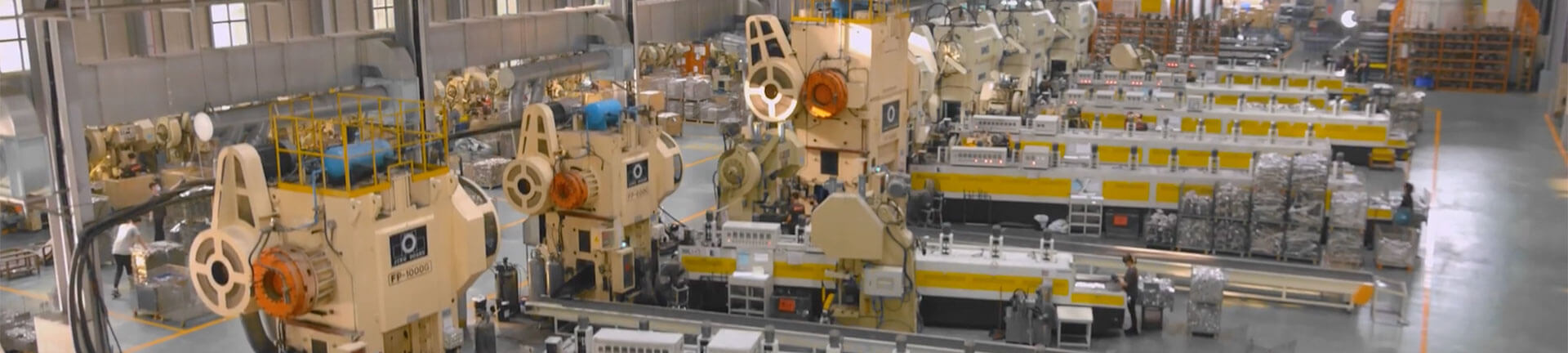
AFT operates a complete lineup of hydraulic and mechanical forging presses ranging from 600T to 8000T. The heavy-duty 8000T press, in particular, can handle large body structural parts and truck wheel hubs. We also offer continuous cold-forging of aluminum, substantially improving output and dimensional consistency for precision components.
2.3 Heat Treatment: AFT's Distinctive Advantage
Where many forging houses outsource heat treatment, AFT insists on completing it in-house:
- T4 solution treatment (8 units): Ensures uniform alloy composition and improved toughness.
- T6 artificial aging (7 units): Precisely controls heating curves to bring hardness to peak strength.
In-house processing shortens production cycles and, just as importantly, enables immediate traceability and adjustment whenever quality variation arises.
Part 3: Key Matrix — 2025 Market Challenges and AFT's Response
| Market Dimension | 2025 U.S. Market Reality | AFT's Solution | Customer Value |
| Cost control | Tariffs surge from 25% to 50% | Intelligent DFM to reduce scrap rates and optimize material selection | Offsets part of the cost pressure from tariffs |
| Supply-chain risk | Premiums at historic highs; procurement instability | In-house aluminum extrusion line (Building G) for stable raw-material supply | Ensures on-time project delivery |
| Quality threshold | Strong demand for high-value (aerospace/EV) applications | IATF 16949 and ISO 14001 certified; VDA 6.3 principles in practice | Meets the strictest safety-component validation |
| Production efficiency | Labor shortages plus low-carbon mandates | IoT machine connectivity, data dashboards, and robotic automation | Higher yield, less operator fatigue, lower carbon footprint |
| Service model | Buyers want more integrated partners | One-stop heat treatment, CNC machining, and anodizing | Simplifies supply-chain management, lowers logistics and inspection costs |
Part 4: Quality Control & Human Resources
4.1 A Rigorous Quality Inspection System
At AFT, quality is more than a slogan. Our facility is equipped with Zeiss coordinate measuring machines (CMM), fluorescent penetrant inspection lines, tensile testing machines, and other advanced instruments. From incoming inspection (IQC) to final inspection (FQC), every process step has corresponding data records.
For tool wear, we monitor cavity variation with 3D scanning equipment and perform real-time die maintenance during first-, mid-, and last-piece inspections, ensuring consistency across tens of thousands of parts.
4.2 A Talent Factory and Corporate Culture
Our people are AFT's most valuable asset. With 320 skilled employees and ongoing investment in VDA courses and professional training, we don't just manufacture parts—we build a knowledge-transfer mechanism that converts the master craftsman's forging instinct into digitized standard operating procedures (SOPs), making technical leadership part of AFT's DNA.
Part 5: Market Strategy & Future Vision
5.1 Expansion: Positioning for the Post-2025 Market
AFT is undertaking major investments, including:
- Building G: A 9,000 m² facility adding five extrusion lines to strengthen vertical integration.
- Building H: Scheduled for completion in late 2025, adding 80 machining units focused on high-precision components.
These investments target high-end markets across North America, Europe, and Japan—particularly the fast-growing demand from electric vehicles and low-earth-orbit satellite aerospace.
FAQ: Aluminum Forging and the 2025 Market
Q1: What is the biggest impact of the 2025 U.S. aluminum tariff increase on procurement? Beyond the direct cost increase, the greatest impact is a change in the procurement model itself. With derivatives now subject to duties, buyers must re-evaluate landed cost across the entire supply chain—making one-stop suppliers that reduce multi-point logistics risk (such as AFT) far more competitive.
Q2: Why does AFT place such emphasis on in-house heat treatment? Heat treatment is decisive for the strength of aluminum forgings. Outsourcing often brings uncontrollable scheduling and difficult traceability. With 15 T4/T6 units, AFT controls temperature precisely, ensuring every batch meets the strict mechanical-property requirements of IATF 16949.
Q3: What structural advantage do forged parts have over CNC-machined parts? Forging produces a grain flow line—akin to the fiber of the metal. Whereas CNC cutting severs these fibers, forging preserves the complete material flow, significantly improving impact toughness and fatigue strength, making it especially suited to safety-critical parts.
Q4: How does AFT help customers address the lightweighting trend? Through DFM guidance, we help customers consolidate multiple components into a single forging, or adopt higher-grade alloys (for example, upgrading from 6-series to 7-series), reducing weight without sacrificing strength—a crucial factor for EV range.
Q5: What are AFT's main application markets? Currently 50% automotive (including the Ford and Ferrari supply chains), 35% motorcycle and powersports (such as Harley-Davidson and Ducati parts), 9% bicycle, with the remainder spanning aerospace, semiconductors, and industrial hardware.
Q6: What is AFT's strategy for the polarized demand market of 2025? AFT focuses on high-value applications. We monitor production data through smart manufacturing (IoT) and continue to expand Buildings G and H to enhance precision machining and extrusion capability, with the goal of supplying safe, reliable, and traceable critical components to the world's leading brands.
Conclusion: Choose AFT, Choose the Stability of "Beyond Tradition"
In the shifting landscape of 2025, aluminum forging is no longer a simple machining service—it is a contest of technical foresight, materials management, and risk control. With over 30 years of expertise, combined with cutting-edge smart facilities and end-to-end service, AFT is ready to take on the impossible alongside customers worldwide, building a future of lightweight, high-performance engineering together.
Contact us to learn more about custom aluminum forging solutions:
- https://www.aft-forge.com/contact/contact.html
- Core Strengths: Collaborative design, in-house heat treatment, 8000T forging capacity, IATF 16949 certified.