
- Home
- Industries
- Aluminum Forging Industrial Hardware
- Impact Extrusion Tube
Impact Extrusion Tube
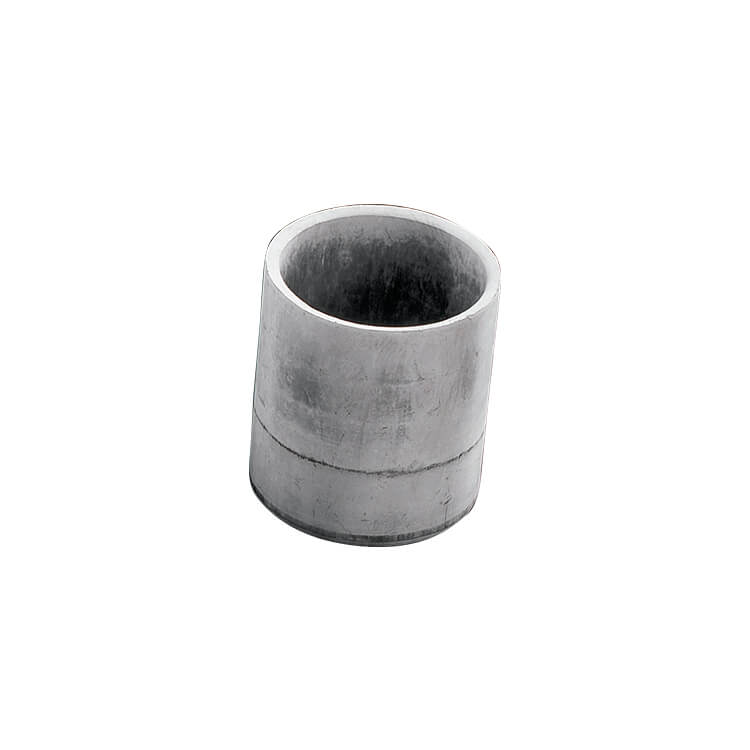
Aluminum Short Impact Extrusion Tube: Stepped-OD Cup-Shaped Part
The aluminum short impact extrusion tube is a short, cup-shaped tube with a stepped outer diameter, cold impact extruded by Al Forge Tech (AFT). The wall and the step are formed in the same operation, and the step can serve as a locating or seal-seating face during assembly. Typical uses include end caps, coupling sleeves, container housings and short housings within mechanisms.
Turning a short cup from solid bar means removing most of the interior material; impact extrusion forms the cavity directly and greatly reduces material usage. After forming, AFT can face the ends and finish the step dimensions, anodize for appearance and corrosion resistance, and verify step concentricity and height on CMM.
Key Features
- Cavity formed directly, saving material versus bar turning
- Stepped OD serves as a locating or seal-seating face
- Good dimensional consistency in volume production
- End faces and step dimensions finish-turned
Aluminum Short Impact Extrusion Tube Specifications and Manufacturing Capability
| Item | Details |
|---|---|
| Product category | Aluminum Forging Industrial Hardware |
| Application | End caps, coupling sleeves, container housings, short mechanism housings |
| Primary process | Cold impact extrusion (cold forging presses 260T–2,500T) |
| Material | Selected to customer specification; 2xxx, 5xxx, 6xxx and 7xxx series aluminum alloys available (e.g. 2014, 6061, 6082, 7075) |
| Heat treatment | In-house T4 solution treatment (8 units) and T6 artificial aging (7 units), set by alloy and strength requirement |
| Secondary machining | CNC machining (52 machining centers, 30 lathes), deburring, vibratory finishing |
| Surface finish | Anodizing (including hard anodizing), shot blasting, e-coating or painting, as required |
| Inspection | Zeiss CMM (4 units), hardness testers, spectrometer, fluorescent penetrant inspection line |
| Dimensions and tolerances | Per customer 2D/3D drawings |
| Quality system | IATF 16949:2016, ISO 14001:2015 |
Aluminum Short Impact Extrusion Tube Manufacturing Process
- Drawing review and DFM: we confirm alloy, load direction and critical dimensions, then run QForm simulation to predict metal flow and defect risk.
- Die design and manufacturing: the number of die sets (for example, blocker and finisher dies) is planned around part complexity, and die contours are checked with a portable 3D scanner.
- Cold forging: impact extrusion on 260T–2,500T presses, suited to thin-walled, tubular and dimensionally repeatable parts.
- Heat treatment: T4 solution treatment and T6 artificial aging are performed in-house, with parameters set by alloy and strength requirement.
- CNC machining and finishing: holes, threads and mating surfaces are machined, followed by deburring, vibratory finishing, shot blasting or anodizing as required.
- Inspection and shipment: dimensions, hardness and chemical composition are verified with CMM, hardness testers and a spectrometer, with lot traceability kept under IATF 16949.
FAQ
How short a part suits impact extrusion?
The formable length depends on diameter, wall thickness and alloy, and short tubes are generally easier to form with stable dimensions. Feasibility is confirmed from the drawing: AFT reviews length-to-diameter ratio, wall thickness and step height to decide whether the part can be formed in one stroke or needs staged operations, and explains the tooling plan in the quotation.
Is the stepped OD formed during extrusion or machined afterward?
Both can be combined. The step contour can be pre-formed during impact extrusion to reduce turning; if the step is a sealing face or has tight height and concentricity requirements, an allowance is left and it is finish-turned. AFT recommends the most economical split between forming and machining based on tolerance grade and volume.
Can you assess forging feasibility while the Aluminum Short Impact Extrusion Tube is still in design?
Yes. Al Forge Tech works mainly as an OEM supplier, and our engineers can give design-for-manufacturability (DFM) feedback at the concept or drawing stage, such as adjusting thin ribs, abrupt section changes or draft angles to avoid laps and underfill. QForm simulation predicts metal flow early, and the results are cross-checked against our die design experience.
How do you keep the Aluminum Short Impact Extrusion Tube consistent from lot to lot?
Al Forge Tech runs incoming (IQC), in-process (IPQC) and final (FQC) inspection under IATF 16949:2016, supported by 4 Zeiss CMMs, hardness testers, a spectrometer and a fluorescent penetrant inspection line. First, middle and last pieces of every lot are checked against the die; when wear causes dimensional drift, the die is reworked to keep the Aluminum Short Impact Extrusion Tube stable across lots.
Is heat treatment for the Aluminum Short Impact Extrusion Tube done in-house?
Yes. Al Forge Tech operates 8 T4 solution treatment units and 7 T6 artificial aging units on site, so the Aluminum Short Impact Extrusion Tube can be solution treated, quenched and aged in the same facility before machining and inspection. Keeping heat treatment in-house removes inter-plant transport, reduces lead-time risk and keeps lot traceability within one quality system. Parameters are set according to the alloy grade and your specification.
Request a Quote for the Aluminum Short Impact Extrusion Tube
Developing a new Aluminum Short Impact Extrusion Tube or converting an existing part to aluminum forging? Send us your 3D/2D drawings, alloy and temper, annual volume and finishing requirements. Our engineering team will reply with a feasibility review, die plan and quotation.
- Online inquiry: Contact Us
- Email: aft@aft-forge.com.tw
To compare similar parts, browse Aluminum Forging Industrial Hardware and our industrial hardware forging applications, or visit About Us for our equipment and certifications.